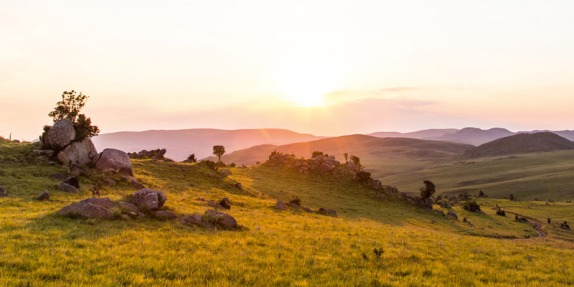
You probably haven’t heard of this landlocked country almost completely surround by South Africa near the Indian Ocean. eSwatini, or Eswatini, is a country that recently changed its names from maybe the more known Swaziland. Eswatini was very surprising in ways like being the only absolute monarchy, or having the longest reining king in the world!!
Colonized by the British, but they didn’t made quite a big dent on society as it has to other countries. Most people are from the 70 clans of Swazis. Setting that aside we picked, Eswatini because it is a tiny, not while known country, and another E country like Ethiopia might be too well known. Happy Travels!
Interesting Facts
- Eswatini is the only country in the world to have black and white rhinos living next
 to each other
 - Most of Eswatini is covered in Velds (The Southern African term for a Uncultivated grassland)
- The Lilangeni (its Currency) has the same fixed value as the South African Rand and they can be interchangeable. Some coins also has a neat curvy edges to them.
- King Mswati lll has an estimated 15 wives
- Eswatini has the highest HIV rate in the world with 27% of the population being infected
To find more about Eswatini go here: Eswatini Slides
Food
Swazi food has local flavors in them and some dishes are British influenced but not as much as their neighbors. Most of the cuisine is local dishes like Biltong, porridge, and boiled native plants. A lot of the plants grown and used in the cooking of Swazi’s come from the new world such as the potato or avocado. Swazi food is not spicy and can be bland but overall I liked it compared to other African dishes that we have eaten.
Breakfast 
Porridge with Sugar and Treacle – This was very sweet but good. For me, I now feel like
Treacle is better than syrup.
Grapefruit with Sugar (South Africa is the 4th largest grower of grapefruit in the world!)
Dinner


Biltong (Dried Southern African beef) – This is just like Beef Jerky and I thought that it was even better
Boiled Pumpkin/Potato leaves with peanuts – This was bitter but it was delicious with the salt and peanuts which gave it a lot of flavor.
Grilled Corn on the Cob – A regular street food in Eswatini
Sidvudvu Recipe – This is a Pumpkin porridge that was kind of bland but sweet at the same time. Even though the recipe calls for squash the traditional way is using Pumpkin
Slaai Recipe – This is a Avocado with lemon and ginger salad. It was awesome and very refreshing. We will definitely be eating this again.
Culture


For Swazi culture we didn’t look that hard. You just have to look on their flag. The shield like thing that is black and white, well thats what we made. It is called a Nguni Shield and traditionally it is made cow skin and sew it to a stick to fight with a sword and spear. This is what they use in battles long ago but they don’t really use it anymore. It isn’t that big even though the flag portrays it really big. It only about 2 ft. tall, though older pictures show them twice as big.
We aren’t using cow skin of course. We just used cardboard and construction paper. Here are the instructions to make them.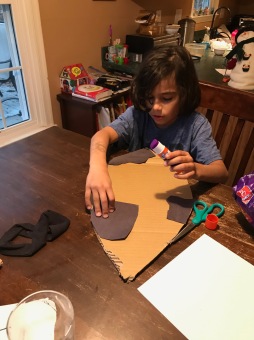
- Cut out a 2 ft. tall football sized shape
- Cut out white and black construction paper to cover the shield
- Glue them on in a manor so each part is covered.
- Draw brown lines to the middle using a marker
- Tape a long stick onto the back
- Fight with your new shield. To get an idea of how they really fight, go here: Nguni Stick Fighting Video
Flag
The Swazi flag is very unique. Having the shield on it that we’ve previously talked about. The stick reinforcing the shield is hanging by tassels made by the feathers of the Loury and the Widowbird. Above the stick are two traditional fighting spears. The white and black colors of the shield symbolize white and black people living in harmony. The Yellow stands for Eswatini’s resources, the blue for peace and stability, and the red for the battles in the past.
For F we are returning to Scandinavia for a country called…
 Playroom Passports
I had no idea about this country. Thank you for sharing this information. Great job in the writeup Isaac.👍👍
LikeLike
Hi Isaac, great writeup. Did not realize Swaziland had changed their name to Eswatini! It is wonderful how much I learn from my grandson!
LikeLike