L is for Lesotho

32038-050-B3D1B0FE

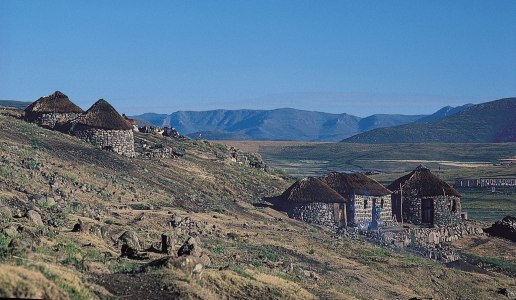
For L we decided to go obscure and very small. To the “Mountain Kingdom” that is one of only three countries to be completely landlocked by another country and one of the few constitutionally monarchies left in the world: Lesotho!

Before this week, we knew close to nothing about this tiny speck of a country surrounded by South Africa, but we learned a lot! This interesting country started as a refuge for several tribes that were fleeing from the takeover of the Zulu tribe back in the 1800s. It eventually became a British protectorate and eventually became its own country in 1966.

Despite being so tiny, they have there own unique culture and dress (or rather, err, blankets), and while relatively poor by the world’s standards, they have one of the highest literacy rates in Africa, with the women actually more literate than the men!

For more info on Lesotho you can read this handy sheet: LESOTHO.

And here are some more interested facts about Lesotho:

  • The lowest point above sea level in Lesotho is 1500 meters, making it the country katse_dam.jpg
    with the highest low point in the world.
  • The life expectancy is just 53 years old, so nearly two-thirds of the population is under 30 years old.
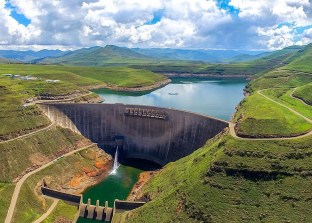
  • The Katse Dam is the highest dam in Africa (the surface reaches 2050 meters when at 100% full) and with 185 meters is the second largest dam wall in Africa.
  • Diamonds are the only mineral produced in LeSotho

FOOD

Breakfast

It was difficult to find what exactly they eat for Breakfast in Lesotho. But, with the British influence there were a few treats for tea and dessert, so we decided to go with those. Eating them along side the famous Rooibus Tea of Lesotho and South Africa.

Makoevna – These were delicious!! Kind of like cinnamon donut holes, but so much better! We will definitely be making them again.

Yogurt and Honey – To dip the Makoevnas in but they didn’t need much

Rooibus Tea

Dinner

Since Lesotho is so poor, meat (mostly beef) is only eaten on very special occasions. So we decided to go with a traditional everyday Basotho (that’s the adjective instead of LeSoth-ian) meal!

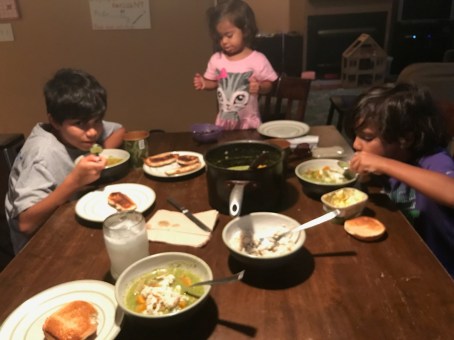
Butha-Buthe (Spinach and Tangerine Soup) – A combination I would not think to make img_8599.jpgbut along with split peas and some onions and seasoning, this is quite tasty!
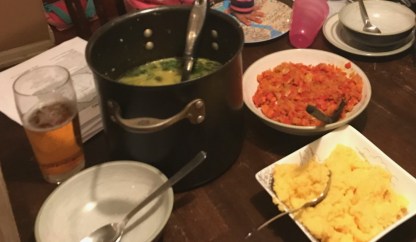
Chakalaka – A very flavorful combination chopped vegetables fried up for a while. We added a little African curry powder for a little kick

Pap-Pap – A staple food in LeSotho. Basically a firmer version of cornmeal grits.

CULTURE

As noted, Lesotho has a culture unique to its tiny area. And one way you can clearly tell a  IMG_8728Basotho is by their dress – a very distinct blanket wrapped around them along and
perhaps even a straw cone like hat. These blankets have even attracted worldwide attention. In fact, this past summer Louis Vuitton made headlines with a Basotho blanket and similar patterned shirt on the runway!

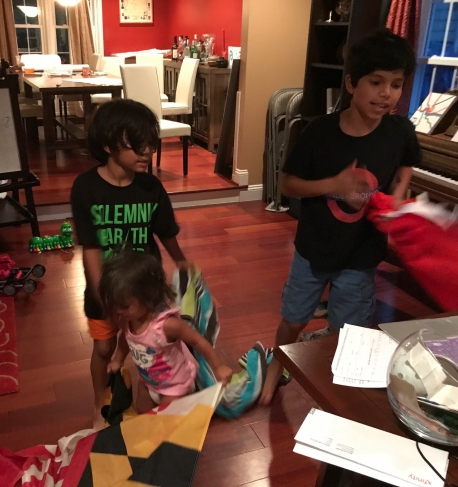
So we decided to make blankets of our own, but simply drawing on patterns rather than

weaving anything. We checked out this website: Basotho Blankets,  and learned that the lines on the blankets symbolize prosperity. Also many blankets have symbols of corn along with the traditional looking LeSotho warrior symbol.

We’ll see you after Christmas for M is for Mauritius !!!


K is for Kyrgyzstan

YurtWe chose Kyrgyzstan because we wanted to do a “Stan” country and it worked out  pretty well and it was very interesting. The Kyrgyz people have been isolated from the world since they pretty much first settled there until the Russians took over and was then part of the Soviet Union and renamed the Soviet Socialist Republic of Kirgiziya until it gained independence in 1992. 100 years ago, nobody in Europe or America probably knew of the Kyrgyz people.

Kyrgyzstan is pretty much covered in mountains. Kyrgyzstan is one of the former Soviet states not to be built up since the end of the USSR since it is the fifth poorest country in Asia. One of those former Soviet countries that is built up is Estonia. Most people live a nomadic life in yurts and less than 40% of the people live in cities. For more information go here:Kyrgyzstan

Interesting facts

  • Kyrgyzstan is one of few countries to have a 3 unit domination of 3comcointhere money in this case it is the Som
  • The word Kyrgyz actually means forty in there language
  • The apple and pear trees seem to have originated somewhere in central Asia, near Kyrgyzstan
  • Kyrgyzstan has the seventh deepest lake in the world, Issyk – kul at 2,408 feet deep but has the second largest volume of water for a lake after the Caspian Sea.

kul

Food

Food in Kyrgyzstan is mainly made up of meat dishes that are not spicy, but some of their dishes have vegetables in them but they still have meat. They also eat some Chinese food such as dumplings which are known as Manty. They drink lots of horse milk and cow milk and have milk based dishes. We made Beshbarmak, Oromo, and Boorsak. Everything was really tasty.

Breakfast

Boorsok Recipe – We ate ours we cheese and honey depending on which taste you liked , sweet or savory. They are doughy but still good and they are shaped like diamonds.

Pickled cabbage – we pickled cabbage with vinegar, sugar,and salt.

Pears and apples

Dinner

Beshbarmak recipe – Beshbarmak is the national dish or Kyrgyzstan and is also eaten in the Xinjiang province of China and Kazakhstan. The word Beshbarmak in Kyrgyz means Five fingers so it is supposed to be eaten with your fingers. The onion sauce is very good and so are the homemade noodles.

Oromo recipe – We steamed ours in a rice cooker but you can follow the instructions. We also only used carrots and onions but you can use any filling that seems right to use.

img_4480.jpg

Culture

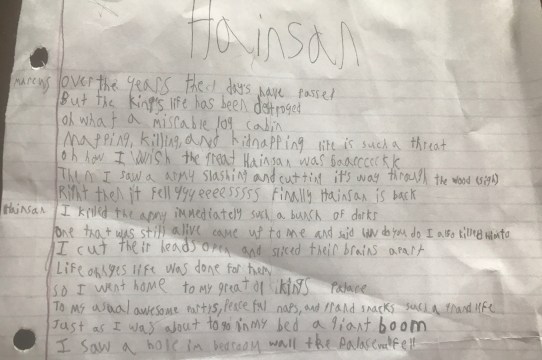
For the culture of Kyrgyzstan we wrote poems. The Kyrgyz people wrote the world’s longest epic poem ever written and is about twenty times longer than the Iliad IMG_7936-1and the Odyssey combined. It had 500,553 lines in the longest version.  The epic is about Manas, the founder of their country.  The poem is more than a thousand years old and the government celebrated the 1,000 anniversary of Manas in 1995. There is more that sixty different versions. The poem talks about uniting the forty tribes of Kyrgyzstan and how Manas worked to unite them so there was no more war. We wrote a few more lines to the poem since we looked at the site:Manas  Below is Andrew’ Epic. And here is a video I made: Isaac’s Manas
img_8061-1-e1511648514927.jpg
Flag

In the middle of the flag there is a sun with forty golden rays representing the forty Flagtribes that make up Kyrgyzstan. The sun stands for peace. In the center of the sun, the two by three lines is the top of a yurt or the crown of it which is called a tunduk. The tunduk represents the universe and family, while the red background of the flag represents the bravery of the country.

Next is L is for Lesotho.

-By Isaac


J is for Japan

mt. fujiWe did not have many options for J – just Jordan, Jamaica and Japan. And as we recently did a Caribbean nation (Dominica) and are going to be doing a lot of Middle Eastern ones with the lack of O, Q and Y countries, we opted to go to the the Far East for our largest and most well-known country yet – Japan!

We knew some basic facts about Japan going into this, but were fascinated by how the country is so modern but holds onto so many of is old traditions. It’s also worth noting that Japan is the oldest continually existing countries, with its founding going back to the late 300s B.C., but people have been living there for more than 10,000 years. However, up until the late 1800s it was isolated from the rest of the world.

Japan does indeed have a rich history of Samurais, emperors, earthquakes, wars and technology. So it was hard to cram it all into one readable  document. But here it is: JAPAN_info

Interesting Facts:

  • Japan consists of more than 3,900 islandsp21-nicol-monkeys-a-20170305-e1488613957200
  • Japan is home to the norther most monkey, the Japanese macaque
  • It is polite to burp and slurp your noodles at a Japanese meal because it is a sign of enjoyment.
  • There are about 5.5 million vending machines in Japan and ost of them are on the streets. They have anything from lightbulbs to fish bait and underwear (Sometimes it’s used, gross)
  • There are about 3,000 McDonalds in Japan, it is the most number of McDonalds of anywhere outside the U.S.

— By Laura

FOOD

For Japanese food you probably guessed it: sushi, miso, fish, and udon and thats what we made. Lots of Japanese food consist of either grilled of raw fish since they are an island country, right? The Japanese also eat lots of noodles with some Chinese influence. They eat pretty much anything including lot’s of seafood. Now try to make some of these dishes!!

Breakfast

Grilled fish – we used frozen tilapia but you can use a Japanese fish if you want fresh or frozen and we sprinkled garlic and soy sauce on top.

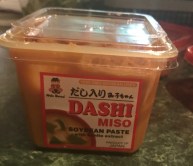
img_7448.jpgMiso soup – for this we got a miso – Dashi paste instead of getting both miso paste and Dashi powder separately. Boil the paste in a pot (we used an earthenware pot) and follow the instructions on the back. We added tofu and scallions to the soup. This was kind of salty and earthy but we all liked it.

Salad – a typical salad with peanuts in there.

Rice – Typical rice in a rice cooker or pot.

Dinner

Sushi!!! Everyone loved it.

  • Tuna – roll up rice and raw tuna in seaweed
  • Fish roe – roll up a decent amount of fish roe and rice in seaweed
  • Tuna – fish roe – put rice on one side  of the seaweed covering all of of the side, press fish row into the rice, flip it over and put rice and tuna in. Roll the seaweed up.
  • Spicy tuna – Spicy tuna recipe it is spicy but not too spicy. You should try the sauce alone.
  • Sashimi – Put the extra tuna on top of rice and rap in strip of seaweed(Very thin).

**Tip – for covering the inside of the roll put only rice on two – thirds of the seaweed, not the whole entire side.

Udon – Udon recipe we didn’t add the chicken but everybody loved it and there was a fight about who could have the last of it!! It was savory and a little sweet.

Tempura – Tempura recipe We used cauliflower, Shishito peppers and shrimp.

CultureIMG_7667

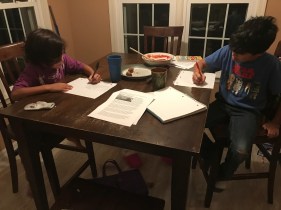
For Japan’s arts we had a load to choose from, like making dolls or fish kites for children’s day which is May 5th. But instead we chose painting,  specifically painting letters for one of the three languages spoken in Japan. There is Hiragana which is the most popular language spoken in Japan. It uses 46 symbols. Katakana which is the second most spoken language in Japan. Katakana is the language that Japanese use to translate into other languages. The least used language is Kanji which is basically Mandarin. It has over 500,000 symbols and it was Japan’s first language to be spoken there.

The writing is sort of complicated with a lot of swirls. This is how you say I love you in Hiragana:あなたを愛しています. We tried to paint it and
it worked out really good. There is one Kanji letter in there., that shouldn’t be there.愛

After that I (i’m Isaac anyway) attempted to write Doumo Ariga in Hiragana. I thought it img_7673.jpgwas Domo Arigato which would look like this:どうもありがとう It means thank you very much. I left out the two う’s which are u’s so the spelling would look like this:どもありがと.  Here is a chart to translate:Hiragana chart And more charts:Katakana chart 

Japan Flagflag-of-japan-2

The Japanese flag looks pretty simple right. It’s just a red circle on a right background but wait, what does the flag mean. The Japanese flag is called Hinomaru or circle of the sun. The sun as it is represented on Japan’s flag plays an important roll in there culture. All emperors were said to be a direct descendent of the sun goddess Amaterasu. During the Japanese empire the sun became a very major symbol in Japan. And why is it red? It’s because it represents the rising sun on a early morning. For more information go to : Japan Flag

Next is K is for Kyrgyzstan!!

— By Isaac


I is for Iceland

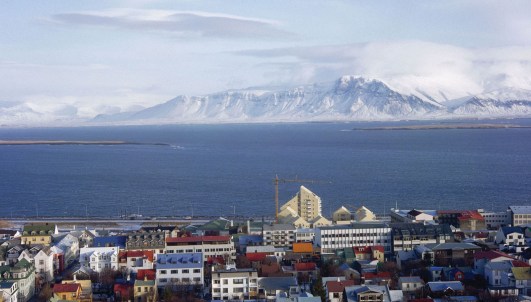
73371-050-2AE863A8So we took a week off, but came back with the extremely interesting country of Iceland.

It has a unique terrain formed out of volcanic lava flows and full of hot springs as well as glaciers. It is also one of the newest countries (in terms of when the land was formed) but has one of the oldest forms of representative government in its 1,100-year-old Althing.

And compared to most all of the other countries we have studied it is far in away the most well off with a a GDP of $49,730 and a life expectancy of 82 (higher than even the U.S.)

Here is the link to the information sheet if you want to learn more details (iceland_info)and below are a few facts that everyone found interesting:

  1. Most of the population lives in the capital Reykjavík, and more than 80 percent of DSF1752-Edit-Editthe island is unpopulated because the land is covered either with permanent snow.
  2. The town of Thingvellir is one of only TWO places in the entire world where you can see two of the earth’s tectonic plates meeting above the earth’s surface (the other is in Africa).
  3. The country was independent for hundreds of years, but 1262, the Althing voted that Iceland should come under the rule of Norway.
  4. The fox is the only four-legged animal native to Iceland.
  5. About 80 percent of Icelandic people believe in elves. Roads have even been built to specifically avoid rocks and trees where elves are rumored to live.

FOOD

If you search online for Icelandic cuisine, you come across a fair number of articles about the weirdest and grossest foods in the country. So we tried avoid the, um, interesting delicacies of boiled sheep’s head and cured shark meat, and go with some more appetizing items.

On a side note, hot dogs are apparently hugely popular in Iceland as they have their own kind made with beef, pork and lamb meat. But I could not find anything similar at speciality stores in the U.S. Just another reason to visit Iceland in person!

Breakfast

Pönnukökur (Icelandic Pancakes) – These are delicious. Kind of a crispy crepe. We ate them with a little white sugar and strawberries

Skyr – Classic Icelandic yogurt.  Technically not yogurt but tastes almost like the Greek variety (apparently they are made differently and with different cultures.) And we think the Skyr is even more delicious and not as tangy. And available at Giant under the Icelandic Provisions brand.

Dinner

Plokkfiskur (Icelandic Fish Stew) – Mixing fish, a milk-based rue and potatoes did not IMG_7168sound super appetizing but it was quite tasty. Reminded us of a New England clam chowder. Just make sure to season it all well! (We even used cod straight from Iceland!)

Pickled Cabbage – Iceland has few home grown veggies so once that keep for a while – like cabbage – are ample.

Brown Bread – Another dinner staple.

CULTURE

img_7322.jpg

After reading a book about Iceland, Andrew became obsessed with learning how to play handball as it the default national sport of Iceland.  In fact, its men’s team won a silver medal in handball in the 2008 Summer Olympics, marking its first team Olympic medal ever.

So we learned the rules  and watched some Icelandic professionals play. And then tried a little on our own. It seems like a cross between soccer and basketball, and Andrew was particularly amused by the way the goalies attempted to stop shots – jumping up like a big X.

I hope you have enjoyed the fascinating country of Iceland. Next week we will be back with our most mainstream country yet – Japan!


H is for Honduras

7209-004-5130A1F7

I admit, I have been looking forward to doing a Central American county since we started this. As I love me some fried plantains and homemade tortillas, and have a special place in my heart for Latin music.

So our first destinations in North American  – much like it was for Christopher Columbus – is Honduras.

Honduras is home to one of the greatest civilizations, the Mayans, and one of their best preserved cities, Copan. But even after the area broke free from the Spanish, it still ended up in being controlled by the U.S. Banana companies, earning its name as a Banana Republic. And since then Honduras has a troubled history of both political unrest and more recently the drug trade.

But it does have some interesting culture, and three very distinct regions – including the amusingly named Mosquito Coast and people that make Honduras unique.

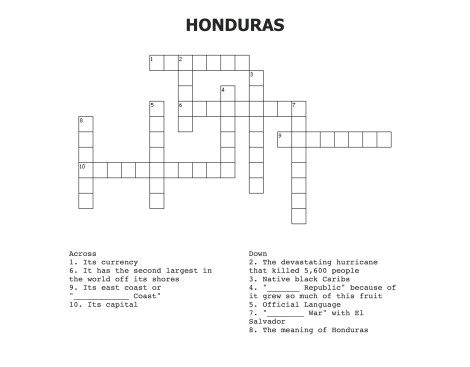
Here is the link for more info on Honduras: Honduras_info . And here is the crossword if you you want to test your knowledge: HONDURAS_CW

HONDURAS_CW

And here are some interesting facts we learned about Honduras:

  • The Bay Island of Honduras sit on the second largest coral reef is off its northern Honduras_-_1Lempirashores
  • The Honduran currency, the lempira, is named after an Indian chief that fought to death against the Spanish conquerors. But it is not his face on the bill, but instead is the image of an American Red Indian.
  • Honduras and El Salvador fought a war in the early 1970s call the “Football War” because the first outbreak of violence happened at a soccer game between the two teams
  • While not typically prone to hurricanes, Hurricane Mitch hit Honduras in 1998, killing 5,600 people.

FOOD

IMG_7064

As I said, I love the Central American Food – as do all three kids. And Honduras did not disappoint.  Honduras its own twist on beans and rice, tortilla, grilled meats. And in fact, we have already eaten baleadas two more for breakfast times since first making them. Isaac declared that Honduras was his second favorite food country (after Albania)!

Breakfast

Baleadas – Its just a flour tortilla filled will refried beans (we used mushed up black
beans) and queso fresco (or  shredded mozzarella, if your in a pinch) and typically eggs and well. And the warmed up in a pan to make it a little crisp. Delicious!! Isaac and Eve were especially big fans.

Fried Sweet Plantains – Just slice them and cook them up in oil until they are nice and brown and soft. Yum! As I said, a favorite of mine!

Guava Nectar

Dinner

Carne Asada – This marinated grilled meat did not disappoint!

Sopa de Frijoles (bean soup) – A combination of whole black beans and pureed black beans with a few additions to make this thick bean stew. Make sure to soak beans overnight!

Chopped Avocados (with lime juice and salt)

Shredded Cabbage

Homemade  corn tortillas – Unlike the thinner corn tortillas they sell in stores in the US, Hondurans like a thicker more pancake looking tortilla. Just get Maseca (Corn Masa Harina) and add water per the instructions and fry them up in a pan on each side for a minute or so.

Dessert: Arroz Con Leche – Another household favorite. It didn’t last two days!

CULTUREIMG_7120

img_7124.jpg

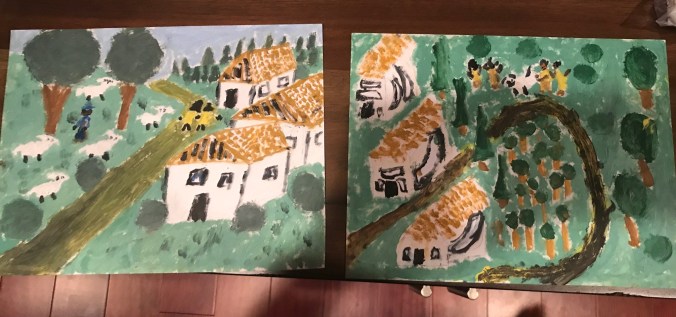
While I do love Latin music, it seems we have been doing quite a bit of dancing lately. So we decided to turn our cultural activities to a more sedentary activity: Painting.

We looked at the art work of José Antonio Velasquez, Honduras’ most famous painter, jave02-2who lived in the mid-1900s (died in 1983). His main painting focus was Primitivism, where one borrows techniques and forms from pre-historic art and cave drawings. Much of his work almost looks like it could be molded out of clay. He is touted as the first Primitivism artist in the Americas.
So we tried our hand at painting like Velasquez! Not quite succeeding but we had fun! Though, Andrew did get frustrated and quit (Eve was exempt from this, as we used oil paints!)

Hope you learned a little more about Honduras. Next week we travel to Iceland!


G is for Guinea-Bissau

Guineabissau

Happy Belated National Day in Guinea-Bissau!! It was not planned, but we happen to study Guinea-Bissau right during a major holiday for the country – Sept 24th, when it celebrated 44 years of independence!

Though, this tiny western African country has had quite a troubled past. It started with resistance under the Portuguese, who used the natives for slaves in the Europe and the New World. And after independence continued with coups and assassinations. Consequently, the country is still extremely poor and there is very little infrastructure.  The average person earns just $590 lives to 50 years old!

Despite this unrest and poverty, you cannot overlook the natural beauty of this coastal nation.  In fact, the Bijago islands off its coast are all a protected UNESCO Biosphere Reserve and its tidal estuaries are home to rare breed of salt water hippopotamuses (ones of Andrew’s favorite facts!)

To learn more about the people, economy and history of Guinea-Bissau. Click here: Guinea-Bissau_info.

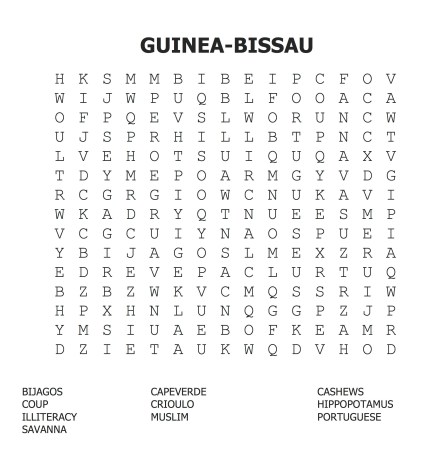
And to test your new knowledge click on this Word Search: GuineaBissau_WSGuineaBissau_WSSome other interesting facts that we learned are:

  • The countries proportion of land under forest (73 percent) is the second highest in Africa after Gabon
  • The name Guinea is thought to come from an Amazigh (Berber) word meaning “land of the blacks.” And they added Bissau to differentiate from the neighboring (and formerly French) Guinea.
  • Guinea-Bissau is the sixth largest producer of cashew nuts.
  • Only about 40 percent of school aged children (7-14) attend school.
  • About 30 percent of the population still practice traditional religions like animal and ancestor worship.

FOOD

As we studied Guinea-Bissau over a holiday, we thought we would prepare a holiday like meal. Being so poor, The people of Guinea-Bissau do not eat meat regularly – mostly millet or rice, and ground nuts and fruit. Everything we cooked and ate was surprisingly delicious and we will definitely be making version of the rice and chicken again! Though, it was hard to find any info on what they ate for breakfast beyond Portuguese pastries and cookies – so we went with that!

Dinner

Cafriela de Frango – Basically a lemon/garlic chicken. And despite the review in the recipe, it tasted extremely flavorful! though it does take a bit of time to cook.

Jollof Rice – This one of the few dishes Guinea- Bissau is known for. And it is amazingly tasty! And Isaac ended up making this dish all all by himself!!

Tuna and Avocado Salad – I wouldn’t think to mix these two – especially with coconut and evaporated milk – but it turned out surprisingly delicious. And Isaac made this all on his own as well!

Breakfast 

img_6961-e1506710205705.jpg
Portuguese Cinnamon Cookie
s -These are fun to make but not super tasty on their own. The kids decided to add jam and syrup to dip them in and I just dipped them in my coffee.

Guava Juice/Coffee

Melon

CULTURE

Like many African tribal cultures, the coming of age for a man is a very important time celebrated with a big ceremony. And its no different for the people on Guinea-Bissau’s  Bissagos Islands. An important part of their ceremony is having the boy/man wear a bull mask and dance around like a bull, symbolizing the aggression that is part of manhood. (And in case you were wondering, the Portuguese brought bulls and cattle to the islands in the 16th century and they became extremely important possessions for the Island tribes.)

So we decided to make our own version of the bull mask (going more for the bull “hat” which we saw in several pictures). But as carving wood and finding actually bull horns  was not happening, we used cardboard and natural items like sticks, grass, shells and coral. Here are some examples of  traditional Guinea-Bissau Bull Masks.

Guinea-Bissau Bull MaskIMG_7021

  • Cut a strip of cardboard about three inches wide to fit around your headIMG_7033
  • Take a paper bag and turn it inside out and stuff the edges inside the bag to forma ball and then mold it into a bull face shape (strong, long line a the top and narrow to the nose)
  • Tape the “face” on the cardboard band as best you an
  • Add the face element and horns gluing the them on with a glue gun. They boys choose shells for eyes and nostrils and coral and sticks for the horns. Isaac decided to top his bull off with a little grass for hair.
  • Put on your head and make your toughest bull face and stomp around!

Hope enjoyed traveling with us to Guinea-Bissau. Next week – Honduras!!


F is for Fiji

bbuopThis resort island nation in the Pacific is certainly a surprise. Having about half the
population being Indian and the majority of the population is Methodist. As a member of the Commonwealth, it gained its independence from the Brits. At first, Fiji just seemed like a normal Polynesian country to us but then, it turned out to be very interesting.

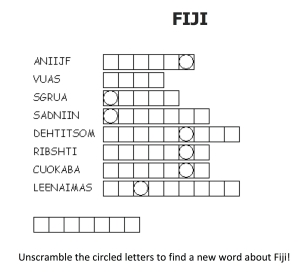
For more detailed information on Fiji’s history, economy, people and climate,click on the PDF:FIJI_info . The Fiji scrambles right there. FIJI_scramble FIJI_scramble

Interesting facts about Fiji

  1. The 300 islands, and 550 islets in Fiji, only about one – third of them are inhabitable.
  2. That Fiji’s national languages are iToukei(Fijian), Hindi, Fijian Hindi, and English because of the big Indian majority.
  3. The top of the head of the leaders in Fijian villages is sacred, so if your going to Fiji, don,t touch the leaders head and DEFINITELY do not wear sunglasses and/or a hat.
  4. Western countries use “Fiji” as the name, that is the Tongan name for these islands, the natives call their home “Viti”.

                                         — By Isaac

FOOD

Fijians eat a lot of Indian food, such as curries, chicken, masala etc. But then there is also Native Fijian food: like cassava, tropical fruit, fish and more fish. Coconuts are also very popular. A coconut palm is on their flag with the bunch of bananas.

The national dish of Fiji is Lovo but we didn’t make it because it takes about a day to cook, and you cook the meat in the ground with charcoal… but I’m not sure if were that advanced.

Breakfast

Fijian Roti – We made it our own way because we couldn’t find a Fijian roti recipe.  We went with a version we know that involves coconut, as well, everything Fijian – including the flag – has coconut.

  • 2 cups flour
  • 2/3rd cup shredded coconut (NOT the sweetened kind)
  • 1 cup hot water

Mix together flour and coconut and then add in hot water and stir until forms a ball. Let it rest for 15 minutes. Form dough into 10-12 balls and flatten into discs. Cook the discs in oil in frying pan for about 2 minutes on each side or until they start turning golden brown.

Sliced Pineapple & Guava Nectar

Dinner

Kokoda  – This is a dish like ceviche. Cooked in lime juice for 24 hours with peppers and onions. The only difference is that Fijians use coconut cream mixed in as well. Everybody loved it.

Cassava Sticks – Very much like french fries but a little crispier. Super delicious

Pina Colodas

Dessert: Cassava Cake –  Yummy! Make sure you get the cake nice and brown

                                                                                                        — By Isaac                                                                                                    

CULTURE

While Hawaii has its Hula, Fiji has a similar dance called the Meke – grass skirts and all. Its a traditional dance used to mark holidays and important events. From the videos we watched it seems to start out slow and pick up to quite a fast pace. Both men and women dance it, though in all the videos we watched, it was typically the men in grass skirts. Check out the video here: Malaga Meke (It starts off kind of like a music video – dancing starts a third of the way through)

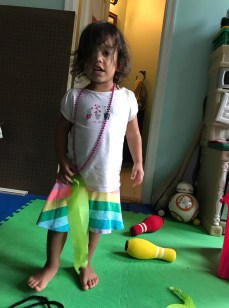
So we decided to make our own “grass” skirts and try the Meke for ourselves. Love the way the kids got into it!

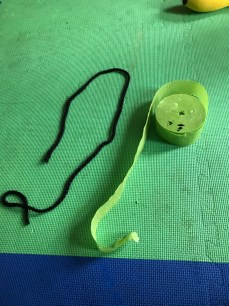
Fiji Grass Skirt

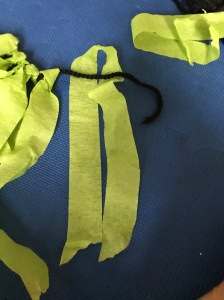
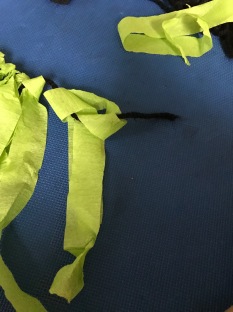
IMG_6833-1IMG_6837IMG_6839IMG_6840

  • Measure yarn around your waist with about six inches extra on each side
  • Measure crepe paper from your waist to your ankle – then double it.
  • Cut/rip about twenty strips of  double – length crepe paper
  • Fold the crepe in half and place the loop end just over the yarn, then pull the two ends through the loop and tighten gently
  • Repeat the prior step for the rest of the paper strips, and space them out evenly
  • Tie skirt around your waist – Enjoy!

And here the kids are getting their Meke on!!! Meke in Maryland


E is for Estonia

163558-050-9A10E91A

We decided to go back to Europe for E, visiting the tiny country of Estonia. I can admit, I did not know a lot about this Baltic nation before we “traveled” there.  But I now have new respect for Estonia. It is one of the most high-tech countries in Europe and it also has one of the highest literacy rates in the world. Estonia has come a long way since their communist era, and we all really loved the way Estonia ended Soviet rule with the “Singing Revolution.”

To learn more about Estonia, please browse our info sheet: EstoniaINFO

And test your new knowledge on this awesome crossword puzzle: ESTONIA_CW

estonia_cw.jpg Below are some interesting facts that we learned

163557-050-8161D760

  1. Estonia has about 1,500 islands
  2. About two-thirds of Estonians live in apartment buildings
  3. Estonia finally became independent from the Soviet Union in 1991, in part because of the “Singing Revolution,” where hundreds of thousands of Estonians expressed their freedom in song.
  4. Estonia inventing a sport called kiiking, where competitors stand on a swing and try to flip it completely around in a circle

COOKING

Cooking Estonian was familiar ingredients put together in new ways.  They have influences from Finnish, Russian and German roots. Breakfast was a big hit and half of dinner was. Dinner was kind of summed up by Andrew when he said, “Why does Estonia food smell stinky but taste good?”

Breakfast

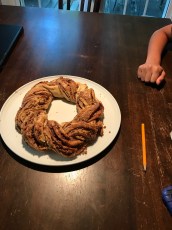
  1. IMG_6636Estonia Kringle – This is delicious and beautiful cake of sorts, that is a close cousin to to the cinnamon roll. It’s actually a special cake typically made for birthdays, but we thought it would make a great break aft – and it did!
  2. Brown bread with melted cheese. This actually what a typically breakfast is. But its usually more a sweetened cheese curd.
  3. Yogurt with crushed cereal. They usually have yogurt with  something called kama – kind of a crumbly topping made from different flours, but as I could not track that down, so we used a easy to find alternative.

Dinner

  1. Muglikapsad – We did this in a crock pot for a few hours and turned out great. (We also wanted to break apart the pork until the end.) I also added caraway powder as another recipe suggested it. And as the recipe states, it does taste even better a day (or few) after.
  2. Estonian Potato Salad – After looking at a few recipes we went for this one, but without the sausage and with pickles instead of cucumbers. Andrew was a particularly big fan of this!
  3. Brown bread with butter. A staple in all Estonian meals

IMG_6671

Culturehqdefault

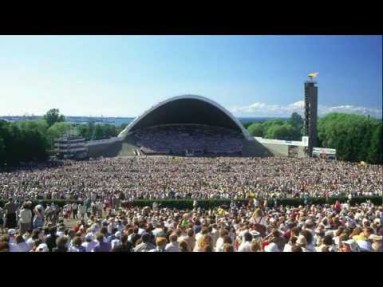
We learned that singing is of huge importance to Estonians. As mentioned above, singing helped them break free of Communism and gain their independence! From 1988 to 1991, several gatherings were held in Estonia were hundreds of thousands of people sung Estonian songs to express their freedom to the Soviet Union and the world. One time they even formed a human chain that stretched across the length of Estonia and sang.

So we decided just to look at some videos on the Singing Revolution and practicing singing the song they sang (but in English).  Here is an informative YouTube video: Singing Revolution History  And Here is a preview for a film about it all called the  “The Singing Revolution”

And here are the words. Best English translation of “Mu isamaa on minu arm” (Land of my Fathers, Land that I Love), the most powerful song of the revolution :

My country is my love,
To whom I’ve given my heart.
To you I sing, my greatest happiness,
My flowering Estonia!
Your pain boils in my heart,
Your pride and joy makes me happy,
My country, my country!

My country is my love,
I shall never leave her,
Even if I must die hundred deaths
Because of for her!
Does the foreign envy slander,
You still live in my heart,
My country, my country!

My country is my love,
And I want to rest,
To lay down into your arms,
My sacred Estonia!
Your birds will sing sleep to me,
flowers will bloom from my ashes,
My country, my country!

By Lydia Koidula

I hoped you enjoyed traveling to and exploring Estonia. We look forward to you joining us next week in Fiji!!

D is for Dominica

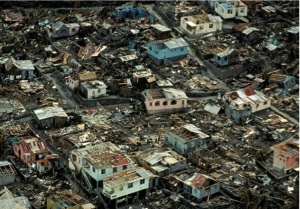
When it comes to tiny island countries Dominica is defiantly on that list. When being about a third of the size of Rhode Island and having lots of devastating hurricanes, this is one of the least known and poorest countries in the Caribbean.

hurruicane

We picked Dominica because we didn’t know anything about Dominica. Make sure to say it Doh – mih – NEE- kah. Dominica turned out to be very interesting country with a natural disaster history not a war history and the only Caribbean country today to be populated with Carib – Indians.

Click here Dominica to know what we learned.

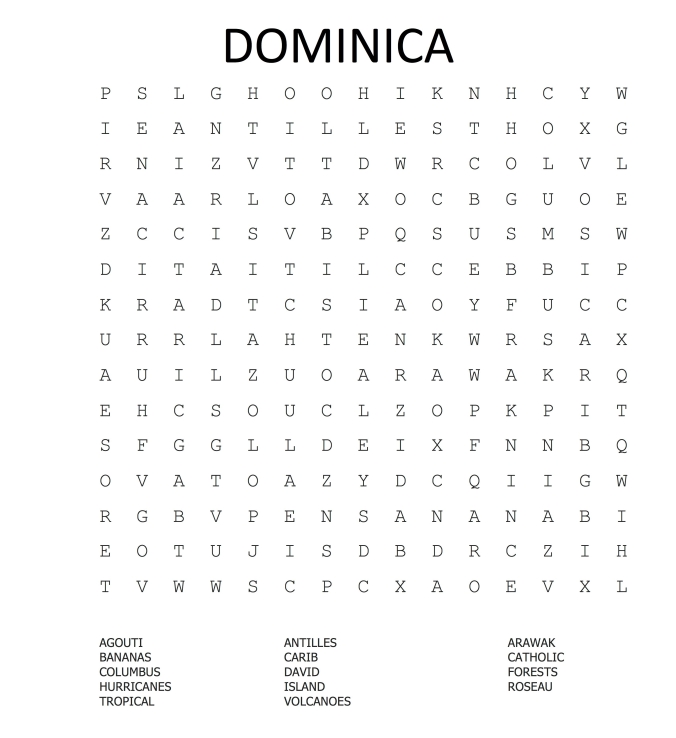
The word search is right here DOMINICA_WordSearch

DOMINICA_WordSearch

Interesting facts about Dominica

5112-004-BC055021

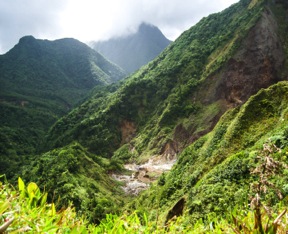
  1. It was the last island to be formed in the Caribbean.   dominicamountains
  2. It is the island in the Caribbean to be the most densely forested.
  3. Dominica has a boiling lake that is the second largest hot spring in the world.
  4. At age 31 in 2004, the new president of Dominica: Roosevelt Skerrit was the youngest president in the world at that time.
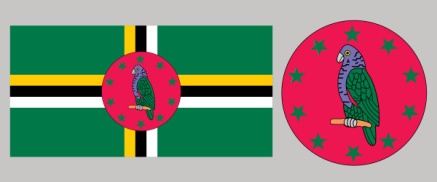
  5. The bird on its flag – the sisserou – is an endangered parrot only found in Dominica
  • By Isaac

FOOD

IMG_6022

While in the Caribbean, Dominican food is quite distinct from that of its neighbors. They do eat lots of salted meat and fish and use Creole flavors, but it tends to not be very spicy and they use some, um, interesting meats. The most famous dish in Dominica is, in fact, Smoky Mountain Chickens, which are the legs of giant frogs, native to the Island. They also love to grill up opossums and agoutis (like large rats).

We didn’t go that quite extreme and stuck to their National Dish of Calloloo and traditional Fish and Bakes. Other Islands have similar versions but I tracked down a Dominica version. (It’s surprisingly hard to find recipes from Dominica and searches often confuse it with Dominican Republic cuisine.)

DINNER

  1. Callaloo – We pretty much followed the recipe, except we used kale instead of Dasheen leaves and cubed ham instead of salted meat. Also we did puree the onions with the kale. And I found other recipes that called for crabs in the soup, so we topped ours with a little crab meat.
  2. Toasted Bread

IMG_6090BREAKFAST

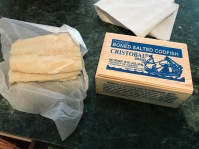
Bakes and Saltfish – Followed the recipe pretty closely. And we easily found salted fish in the our regular grocery store.

CULTURE

What Dominica is most known for is its music and dancing. In fact, the World Creole Music Festival is held in Dominica every October, and they have their own very popular Carnival in February.  While calypso, soca and reggae are popular they also have their own style called bouyon  and Candence-lypso.  Both blend many Caribbean styles (and are super fun to dance to!) You can have a listen here: Bouyon Music

We decided to try a little Dominica dancing ourselves. And the kids, reluctant at first, had a great time, and also got quite the work out! We found a few video which clearly demonstrate and repeat key Soca/Bouyon dance moves: Soca-Aerobics, and are fun to follow.

dominicadancing

What I learned is that basically you need to:

  1. Move your hips in a circle a lot (apparently this is called “whining”)
  2. Use dramatic stomps to break up hip circles
  3. Wave your flag/rag/shirt around lots

And here’s the kids dancing: Soca/Bouyon Kids. Enjoy!

Sorry for the delay in this week, but next week we promise to promptly present “E is for Estonia!”

C is for Cambodia

rural c

For C we didn’t choose Canada or China for example because they’re both too big and well known. We didn’t pick African countries like Cameroon and Comoros because they’re too close to our last country. Instead we picked this country home to the Khmer Rouge and Angkor Wat.

With its interesting history and poor economy this mainly Buddhist country, called Cambodia, is the smallest country on the Indochina peninsula.

If you want to learn more click here for our info packet. Cambodia

For the word search click here: CambodiaWordSearch

cambodiawordsearch.jpg

Interesting Facts about Cambodia:

  1. The great lake’s depth in the wet season is 9 times deeper then it is in the dry season. The area growth nearly triples it size from the dry to the wet season.
  2. The Vietnamese communists invaded the Khmer Rouge communists.
  3. The people and language are not called “Cambodians”and “Cambodian”, instead both are called Khmer.
  4. Angkor Wat is on the Cambodia flag.


Food

Food in Cambodia has Vietnamese and Thai influence. A lot of dishes have fish in them. Most dishes are not that spicy and a lot of dishes have lemongrass in them. For breakfast we had pork noodle soup (Kuy Teav). For dinner we had a green mango salad.(Swai Nhoam Pakea Kiem) and fish amok.

Breakfast

Kuy Teav recipe  For this recipe we took a shortcut and got instant pork broth and mixed it with gelatin instead of making the pork broth from scratch. It tasted like ramen noodles and the pork broth was very yummy! mmmm


IMG_5918

Dinner

Green Mango salad recipe  This tasted a lot like the Thai green papaya salad. Our mangoes were green on the outside but orange in the inside. Try to find ones that look more green on the inside.

Fish Amok recipe  This is served in a banana leaf boat. For us it was hard to wrap them so we tried two and laid the banana leaves in a pan.  We also steamed in the oven. Our Amok was not as custardy as it showed in the picture. It was more watery but still tasty.


Culture and Art

For the art we did Khmer shadow puppets which are pretty cool. A white screen is put down before a fire. The actors cast their puppets on the screen and act the play out with their puppets. They create a shadow on the screen with the puppets but the actors have to be careful not to show their body. Puppets are traditionally made with leather, but we’ll stick to black construction paper right now. Puppets characters are sacred gods. Here is a link to a video to learn more about these shadow puppets:                                                Sbek Thom Shadow Theater

  Instructions to make shadow puppet

  1. Draw a character on black paper. Make sure to have a circle outline and holes or slits inside the outline to show the character. The edges of the character have to be connected to the outline.
  2. Cut the holes out using an xacto knife. Make sure you do it on a cutting board. If you break the line tape it together.
  3. Tape some sort of long skinny thing to each side of the puppet. We used skewers.
  4. To set up the theater hang a white sheet from something. Put a light behind it. Then lay down or duck to act it out. You must hold the puppets up high.

To watch a video on our shadow puppets press here.

IMG_5999


Cambodia Flag

The Cambodia flag has 2 stripes of blue on and below a bigger stripe of red. As i’ve already explained the towers of Angkor Wat are on the front. The white color represents the country’s major religion: Buddhism. The temple represents the universe. The blue represents Cambodia’s royalty of its past empires. And lastly, the red represents means the nation, Cambodia. It was adopted on June 30, 1993, the flag was originally adopted before the Khmer Rouge on October 29, 1948. To learn more, click here on the Wikipedia description: Cambodia flag

20170824_074826_resized

Next is D is for Dominica.

– By Isaac